
Every year on April 25, the world pauses to mark World Malaria Day. Organizations share numbers. Campaigns launch. And then, often, the moment passes.
But for the missionaries and pastors who partner with Mission Partners For Christ across Africa, April 25 is not a calendar event. It’s a day that finds them mid-sentence in a story they’ve been living all year long.
We asked three of our partners to tell us what malaria actually looks like. We wanted to hear directly from those living alongside Malaria, not from a textbook. Their words stopped us in our tracks. We think they’ll stop you too.
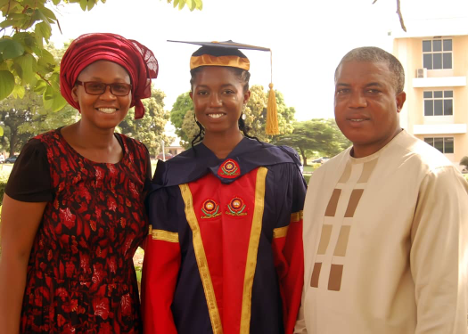
Nnamidi Agoucha and family
“We Study This by Symptoms”
Nnamidi Agoucha has served with CAPRO Nigeria for years, moving his family across borders in obedience to the mission. He has watched malaria weave itself into the rhythms of ordinary life in ways that most people in the West cannot imagine.
“I know I’m sick with malaria,” he writes, “when I either begin to run temperature, feeling feverish/chills, bitterness of the tongue, loss of appetite, and dizziness.”
His family has become practiced diagnosticians out of necessity.
“We study this by symptoms,” Agoucha explains. His wife’s symptoms differ from his own: “headache even after taking paracetamol, or feeling of heaviness in the head, or weakness in the body, or sleeping too much, or tiredness, or feeling sleepy even after taken enough sleep at night, or fever — the body will be hot internally feeling cold.”
On average, Agoucha estimates each member of his household contracts malaria three to four times a year. The last time was December 2025.
His children have missed school exams because of it. He and his wife have had to coach them from a distance, urging them to pay attention to their own bodies the way their parents have learned to pay attention for them. “When you are in school, know that we are not there with you,” he tells them. “Don’t wait to break down before realizing you will go to school clinic.”
When Agoucha’s family relocated to Lagos for a Burundi mission assignment in 2008, the change of environment brought an intensity of infection they hadn’t expected. “There came a period of time that two weeks does not pass without my wife treating malaria.” They eventually installed mosquito nets on every bed in their home.
Agoucha writes with the matter-of-fact steadiness of someone who has made peace with the ongoing battle, without ever minimizing it. His is not a story of hopelessness. It is a story of vigilance, which is born out of love for his family and his calling.
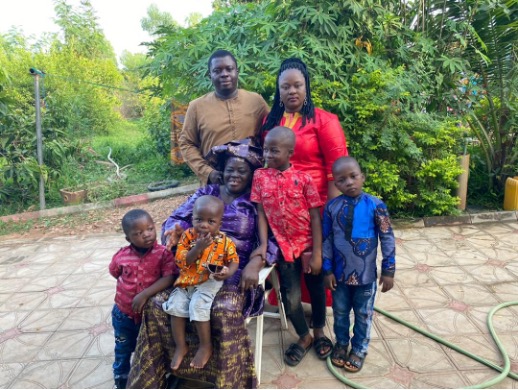
Pastor Jean David Teewende Ouedraogo
and family
“I Speak of This with Tears in My Eyes”
Pastor Jean David Teegwende Ouedraogo founded a school complex in Burkina Faso and has shepherded his community through decades of hardship. He has watched malaria take more than 4,000 lives per year in his country. He has watched it take someone he knew by name.
“One of our former students sadly died of malaria because she could not afford to buy medication in 2024,” he writes. “I speak of this with tears in my eyes, because she had a bright future ahead of her. Her name was Ouedraogo Habibou.”
“One of our former students sadly died of malaria because she could not afford to buy medication in 2024,” he writes. “I speak of this with tears in my eyes, because she had a bright future ahead of her. Her name was Ouedraogo Habibou.”
She had a name. She had a future. And the barrier between her and the treatment that could have saved her life was money.
Pastor Ouedraogo’s own family — his wife and four children — contract malaria two to three times each year. High fevers approaching 104 degrees Fahrenheit, diarrhea, vomiting. Last year, his wife was hospitalized three times.
He has seen, firsthand, what a medical mission campaign can do. In 2019, Mission Partners For Christ conducted a healthcare outreach across several regions of Burkina Faso, including at Eben Ezer college (the school he founded). Nearly 480 villagers received malaria treatment.
“The malaria medication that Mission Partners For Christ provides during healthcare campaigns,” he writes, “is vital and saves lives.”
He does not use those words lightly.
“It’s the Insidious Aspect That Causes It to Claim So Many Victims”
Kassum Balbone serves as regional mobilization officer for CAPRO in the Volta Region, based in Burkina Faso. His account of malaria carries something that statistics rarely capture: the deceptiveness of the disease.
“Because the disease has become so insidious,” he writes, “and because our bodies have become accustomed to it, the primary symptoms don’t necessarily appear immediately, giving the disease time to take hold and cause damage.”
Balbone describes contracting malaria three or four times in 2025 alone. “It’s true that it didn’t take weeks,” he notes, “but each time I spent at least a week in bed or in a very slow state.”
What concerns him most is how ordinary the disease now feels, and how that very familiarity can become fatal. Mosquitoes in his region, once seasonal, have grown resistant to insecticides and are now present year-round. The result is that malaria no longer arrives with clear warning. “In most cases, for example, I didn’t have fever,” he writes, “but I felt tired. And I thought it was just normal fatigue until I noticed it was recurring.”
He remembers a friend — a brother in Christ, thirty years old, who had come from Congo Brazzaville to study in Burkina Faso. The young man fell ill but didn’t take it seriously. By the time he asked to be brought to the hospital, the Plasmodium parasite had destroyed nearly all his red blood cells. He died two days later.
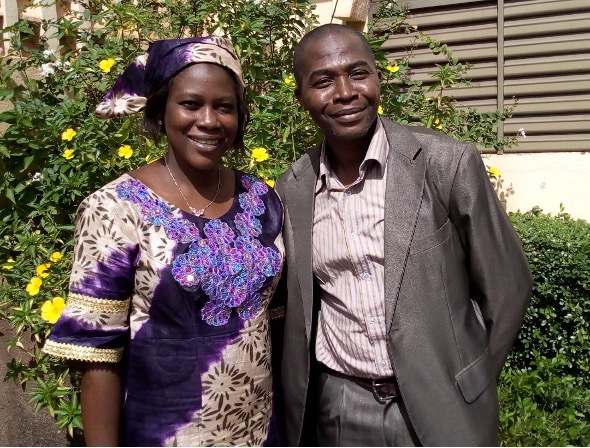
Kassum and Assita Balbone
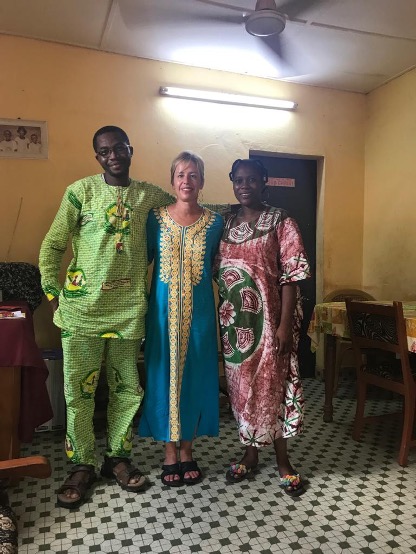
Sheri with Kassum and Assita Balbone
“It was a shock to me,” Balbone writes simply.
He is careful not to leave readers without hope: “It is curable and treatable, especially when detected early.” But he is equally clear about the cost of delay. He is also deeply aware of the gap between what is technically possible and what is actually accessible to people in underserved parts of Africa.
What World Malaria Day Asks of Us
The people of God in Africa are not waiting passively for the world to care. Nnamidi Agoucha is raising his children to know their own bodies. Kassum Balbone is mobilizing others for mission even as he manages his own recurring illness. Pastor Ouedraogo is running a school, shepherding a congregation, and grieving a student who should still be alive.
They are not statistics. They are partners. And what they are facing is preventable.
World Malaria Day is a day to remember that the gap between “treatable” and “treated” is, very often, a financial one. Medication that costs mere dollars in a Western pharmacy is out of reach for families living on less than $2 a day. A mosquito net. A course of antimalarial medication. A clinic with supplies stocked. These are not luxuries. Rather, they are the difference between a life interrupted by illness and a life cut short by it.
At Mission Partners For Christ, we believe that carrying the Gospel into the world means carrying it whole: body and soul, presence and provision. We go. We treat. We stay connected to the people we serve. And we invite you to be part of that work.
This World Malaria Day, would you give toward life-saving malaria treatment for communities we serve?
Or explore upcoming medical mission trips where you can serve alongside partners like Kassum, Nnamidi, and Pastor Ouedraogo:
Quotes and images used with permission. Nnamidi Agoucha serves with CAPRO Nigeria. Kassum Balbone is the regional mobilization officer for CAPRO in Burkina Faso’s Volta Region. Pastor Jean David Teegwende Ouedraogo is the founder of a school complex in Burkina Faso.