Clean Water For Christmas
Help Us Gift Clean Water To Underserved Communities!
Can You Imagine Having No Access To Clean Water?
For millions of people across Africa, this is the daily reality. The unfortunate result is that families across Africa only have access to contaminated water; children grow up sick, and mothers spend their days walking for water that may not be safe when they get home.
You Can Help Us Change That!
Help Us Raise Funds To Provide A Clean Water Well in Togo!
The Complicated Problem
We tend to assume the primary barrier to clean water is that no one has drilled a well yet. If someone would just build one, the problem would be solved.
But the reality on the ground is more complicated.
This year, our focus is on Village Agbedjipe, in Togo. It is one of many small, remote communities in West Africa where the nearest safe water is far out of reach. In places like this, the water source is often a local pond or stream shared by people and animals, used for drinking, bathing, and washing at the same time. Women rise before dawn and make the long walk to collect it. They carry it home in jugs, and their children drink it, because there is nothing else.
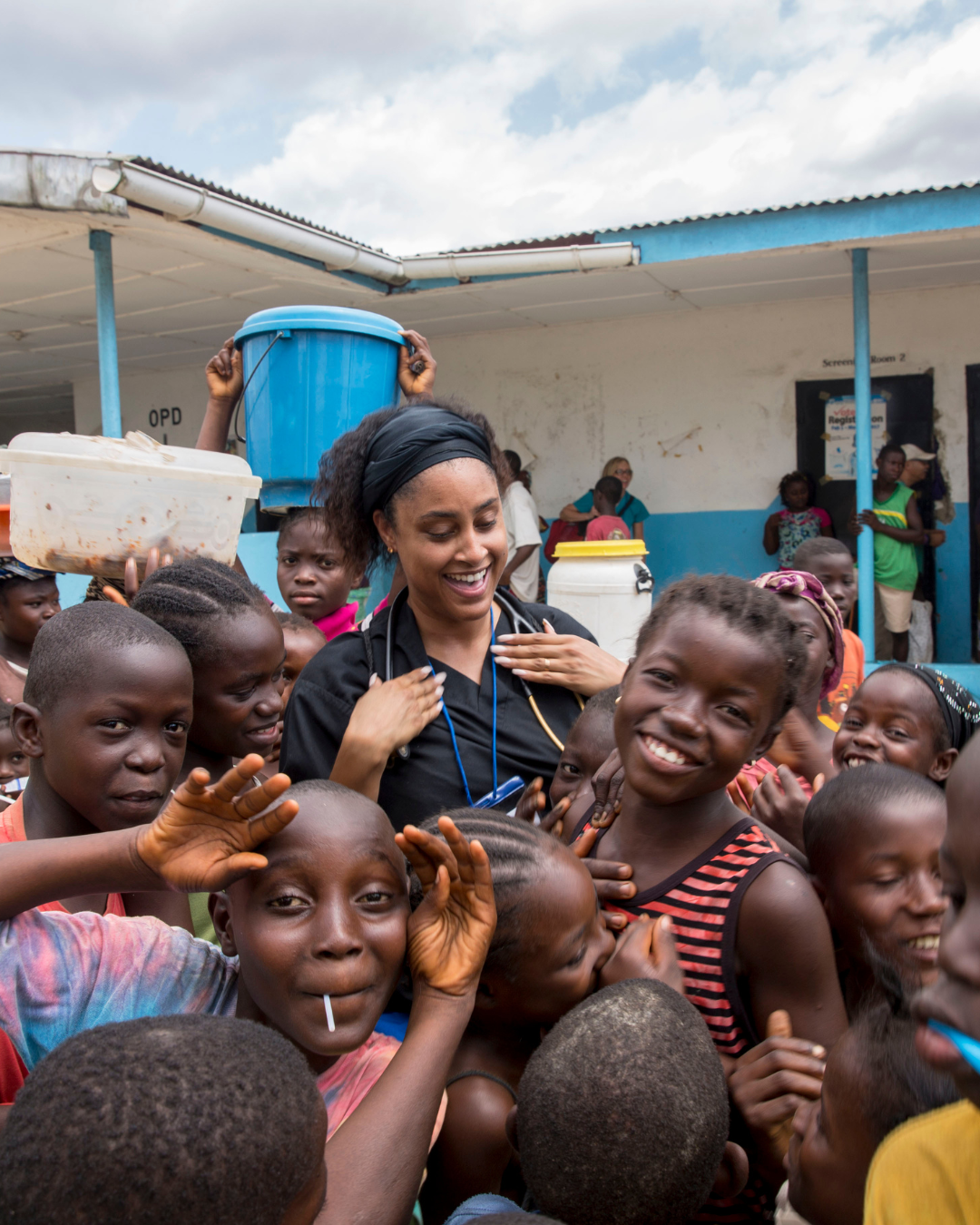
That water carries a cost that doesn’t show up on any receipt. Our medical teams see its effects in every village we serve: intestinal parasites, waterborne illness, and children with chronic stomach pain who have never known what it feels like to drink water that doesn’t make them sick.
And the problem goes deeper than distance. Hours spent walking for water are hours not spent in school, tending a farm, or growing a small business. A family that must manage the absence of clean water every single day has little left over to build a future. Wells that are drilled without a plan for care can break and go unrepaired. In remote places, help is hard to reach and easy to lose.
Agbedjipe is not alone. In the Tennet region of South Sudan, where our team served in February, six boreholes were drilled for between 10,000 and 20,000 people. Only one still works. When asked how many patients had intestinal parasites, MPFC Founder, Sheri Postmas, responded with a simple answer: 100 percent. A well that no one is equipped to keep running eventually becomes a hole in the ground, and people go back to the water they’ve always known.
It doesn’t have to be this way.
The Solution Exists
When a well is drilled in the right place, with the right partners, it does far more than give one family a drink of water. It gives an entire community a different future.
In 2018, our team served in Effaho, in Côte d’Ivoire. While a survey was being done to find the right site for a borehole, a local man in his mid-twenties told our community development coach that from the day he was born, the village stream had been his only source of water. When he heard a borehole was coming, he could hardly believe it. Most of the village felt the same, because clean water had always seemed more like a dream than a plan.
Today, that borehole still works. Families still draw clean water for drinking and everything else a household needs. No one had to wait another 25 years.
In Burundi in 2023, we met the Batwa people, whose children faced an impossible choice: go to school, or go find water. After a well was provided, children went back to school and families grew healthier. A community that had been overlooked discovered that someone had seen them.
These are not stories of a single gift. They are stories of what happens when a community has something that keeps working long after our team returns home: clean water for drinking and washing, time given back to mothers and children, healthier bodies. A well also becomes a place where relationships form and the love of Christ can be shared naturally, because someone saw a real need and showed up.
The Cost and The Goal
A Single Clean Water Well Costs $19,560
Our Clean Water for Christmas campaign is raising $19,560 to fund one clean water well in Village Agbedjipe, Togo, by December 31. That is the full cost of one well.
And if we reach that goal, a generous donor will fund a second well among the Tennet people in South Sudan, the same community where only one of six boreholes still works.
One well for Togo. A second for South Sudan. Together, we can do this.